How often do pilots skip checklist steps?

Board blames fatal overrun on pilot error.
Source: NTSB Issues Bedford Gulfstream IV Crash Report | Flying Magazine

Checklists were a major innovation in flying, and are now being pushed in health care. But as I research this, it’s clear that although pilots all swear by them, use is less than 100%. Perhaps less than 99% – and a 1% error rate is very high when there are hundreds of items on a flight.

It’s very hard to know the real number. But the pilots in this crash, both very experienced, did pre-takeoff control checks for less than 10% of their flights!

Data from a recorder installed in the airplane showed that in the previous 176 takeoffs, full flight control checks as called for on the GIV’s checklist were carried out only twice and partial checks only 16 times. The pilots on the evening of the accident skipped the flight control check, which might have revealed to them that the gust lock mechanism was still engaged.

This particular item – forgetting to unlock the “gust locks” – has been killing pilots since the first gust locks. Famous examples in the 1930s were the prototype B-17, and the head of the German Air Force. (Both discussed in my forthcoming chapter on standard procedures in aviation.)
Gulfstream IV jet with six on board - crashed and burned after failed takeoff.

Autonomous vehicles – how skeptical should we be?

I have gone up and down on the prospects for  autonomous vehicles (AVs). There are a lot of technical hurdles, and probably as many social issues such as how liability laws will be written. The Google car has been over-hyped. But today I received a claim that AVs are not feasible until 5G wireless networks are ubiquitous.

Continue reading

Is the FDA Too Conservative or Too Aggressive?

I have long argued that the FDA has an incentive to delay the introduction of new drugs because approving a bad drug (Type I error) has more severe consequences for the FDA than does failing to approve a good drug (Type II […]

Source: Is the FDA Too Conservative or Too Aggressive?

My take: this paper by  Vahid Montazerhodjat and Andrew Lo is interesting, but it only looks at one issue, and there are many other problems that make overapproval more likely. There are many  biases in the drug pipeline and FDA approval process, most of which are heavily in favor of approving drugs that do nothing (and yet, still have side effects). To mention one of many, the population used to test drugs is younger, healthier, more homogeneous, and more compliant than the population that ends up actually taking the drug. A second bias is that the testing process screens out people who have major side effects – they stop taking the drug, and are dropped from the sample (and from the statistical analysis at the end). So we only see the people with moderate or no side effects. Both of these problems lead to biases, which better statistical methods cannot remove.

The paper is interesting, but it is working from an idealized model of the drug research process, and I would not take its quantitative results seriously. The basic logic seems sound, though: there should be different approval standards for different diseases.

First FAA-Approved Drone Delivery Is a Success, but Does It Matter? – IEEE Spectrum

First FAA-Approved Drone Delivery Is a Success, but Does It Matter? 

I’ve been tracking the potential for drone (Autonomous vehicle) delivery of packages since before Amazon proposed it. I’m generally very skeptical that it can play a major role in delivering routine packages. And I certainly thought Amazon’s claimed timetable was blowing smoke. (As it turned out to be.)

Basic issues include safety, landing somewhere in urban areas, weather (except where I live) and payload/range/weight. Longer range or bigger payload require a larger vehicle, which is more of a  potential safety hazard. Micro navigation (phone poles) might also be a problem, as stated in this IEEE article, but I can envision technical solutions to that issue.

Here is a 2013 IEEE article that makes the basic anti-Amazon case.  Amazon was talking about being ready in 2015!

Yet over a longer period, say before 2020, there are niche applications that will be feasible. Whether they will be economically sensible remains to be seen. Rather clearly, deliveries will start with small, high-value, urgent packages.  Here’s a  video about a rural demonstration of delivering meds.

Here is my comment to someone who said drone delivery was impossible because of theft and safety.

Theft is an issue, but there are many potential partial solutions. For example, once stolen the drone would not function. (It could still be stripped for parts, but that has possible solutions as well.) So it becomes an arms race/incentive system, just like stealing packages from your front door.

   Safety is an issue in cities, but suppose the drones become as safe as a delivery truck driving through your neighborhood. A six rotor drone is pretty robust. Safety is less of an issue in some regions. And there may even be ways to “crash safe,” including airbags, parachutes, etc.

Regulatory fear is likely to continue to be a big issue in the USA. In my opinion, that is a shame, and will destroy the US lead in the technology (for which there are many good applications – just probably not package delivery). So I’m glad to see Amazon is taking a role in proposing sensible regulation. 
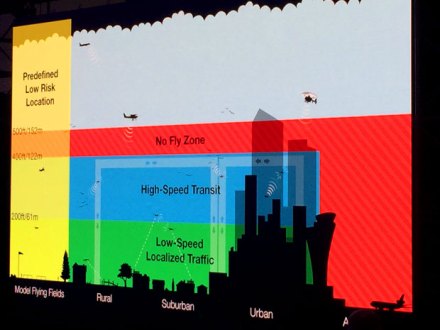
First FAA-Approved Drone Delivery Is a Success, but Does It Matter? - IEEE Spectrum

General drone technology clearly has a productive future. But my guess is that the US will be pushed aside by other countries that are less hung up about regulating every possible problem. (E.g. Australia?)

Tesla is tiny – so why is it worth $35 billion?

It’s still hard for me to understand Tesla’s market cap, currently $35B ($35,000,000,000). Sales of 11K units/quarter are still smaller than tiny (for an auto company). Of course if it achieves a 50% annual growth trajectory for 5 years, that would justify a huge value – but I have not read anything saying that they are able to scale manucturing at that rate. (Admission: I used to consistently say that Apple was over-valued. And I was consistently wrong.)

“Tesla said in a filing Thursday that it delivered 11,507 vehicles during the April-through-June period, a 52 percent increase compared with the same quarter a year ago.”

I also did not realize that Musk was not a founder of the company.  (1) Breakthrough Strategy and Innovation.

Using data mining to ban trolls on League of Legends

Something I just found for my Big Data class.

Riot rolls out automated, instant bans for League of Legends trolls

Machine learning system aims to remove problem players “within 15 minutes.”

An interesting thread of player comments has a good discussion of potential problems with automated bans. Only time will tell how well the company develops the system to get around these issues.

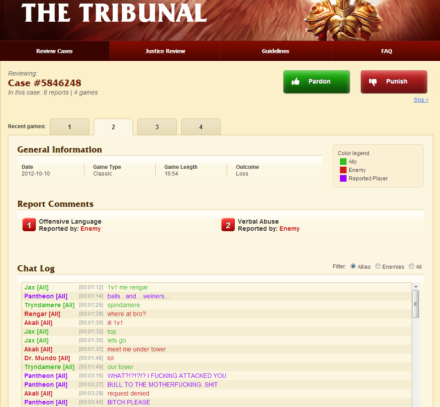
This company also took an experimental approach to banning players. And hired 3 PhDs in Cognitive Science to develop it. (Just to be clear, their experiments did not appear to be automated A/B style experiments.) After the jump is a screen shot from that system.

League of Legends screen shot

But, I’m not tempted to play League of Legends to study player behavior and experiment with getting banned! (I don’t think I’ve ever tried an MMO beyond some prototypes 15 years ago.)  If any players want to post your observations here, great.

Chartjunk: Second-worst graphic of the month!

A bad graphic from a pro-solar group is perhaps not surprising. (See previous post.) Here is one from Bloomberg  that verges on incomprehensible. Bloomberg as a source is surprising.

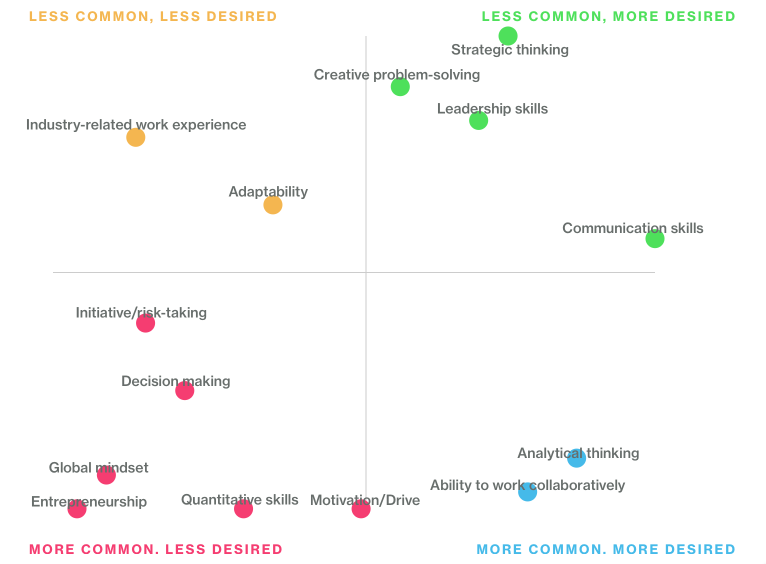
Which way is up? (Answer: down is up)

Which way is up? (Answer: down is up)

Looking closer, it appears that Skill Desirability increase from left to right, and Skill Frequency increases from top to bottom?!  Graphs should be drawn so that UP means higher.  In any case, it should not take prolonged inspection to deduce which variable is on the X axis.

The graphic also manages to make as many schools as possible look good at something. In Financial Services, the top 3 schools for Communications skills are listed as  Tuck, McCombs, and Kellogg. But in Technology, the top 3 schools change to Fuqua, Haas, and Kellogg. And for Consulting, the top 3  are London, Harvard, and Ivey. Since “Communication Skills” are the most desired skill of all according to the graph, eight schools can say they are in the Top 3 for teaching the most sought-after skills.