Art to Science: in making whiskey barrels

Whiskey is aged in oak barrels, and oak wood is highly variable. But barrel-making can still become much more scientific.

“Twenty-five years ago, it was more art than science. Now we have a healthy dose of science in with the art.” Larry Combs, the general manager for Jack Daniel’s

Recently, the two companies completed the decade-long Single Oak Project, in which they made 192 barrels, each using the wood from a single log, to find what constituted the “perfect” bourbon. (Among other things, they found that wood from the bottom of a tree made for the best aging.). Computers track each stave as it moves through assembly, while sensors analyze staves for density and moisture content. Instead of guessing how much to toast a barrel, operators use lasers and infrared cameras to monitor the temperature of the wood and the precise chemical signature that the heat coaxes to the surface — all subject to the customer’s desired flavor profile.“They’ve developed technologies so that if we say we want coconut flavors, they can apply this or that process” — like applying precise amounts of heat to different parts of the wood to tease out certain flavors — “and we’ll have it,” said Charles de Pottere, the director of production and planning at Jackson Family Wines…

… Black Swan makes barrels with a honeycomb design etched on the inside, which increases surface area and reduces a whiskey’s aging time.

Their approach: learn by experimentation, and use the new knowledge for tight process control. Same approach as machining, aviation, …. And this is a 400+ year old industry. Now I just need a word that’s better than “science” to describe this approach. (See my previous post.)

Last comment: according to the article, one of the main forces driving willingness to learn was competition from superior French barrels.

Source: Packing Technology Into the Timeless Barrel – The New York Times

Why Elon Musk’s New Strategy Makes Sense — Really??

Claim: “The history of architectural innovation is on his side. Source: Why Elon Musk’s New Strategy Makes Sense” by Joshua Gans

I’ve seen many people encouraging Musk’s integration of Solar City with Tesla, but it strikes me as a weak move. There is some synergy between electric cars and home PV, but electric energy is mostly fungible. Only if local utilities use really dumb pricing schemes for solar power would it be useful to bypass them if you have an EV. (Admittedly, many utilities do exactly that.)

Second, his closing argument contradicts a lot of other analysis.  I have not read Gans book. But he writes that:

As I outline in my book, The Disruption Dilemma, the companies that have thrived in the face of architectural disruption of this kind are those that have kept all the parts close and in control rather than spread them out.

But, “keeping all the parts under your control” rules out 99% of startups. And it also seems historically incorrect. IBM, when it started the IBM-PC revolution, did so by surrendering control of almost everything, including the OS, processor, hard drive, and applications. IBM made all of these things for its mainframes, but it revolutionized the industry by NOT controlling them for personal computers. And this was certainly architectural disruption – the shift from a closed to an open architecture.

I’ll have to look at his book. Or ask my friend Liz Lyons down the hall, who was his student.

Can Motorola establish a new smartphone platform?

Every electronics company dreams of starting a new platform that other firms adopt and build on. It’s one of the few paths to riches  in electronics (think: iPhone, Android, Blu-Ray, CDMA, Steam, Playstation). Check out extensive writing by my friend Michael Cusumano and his colleague Annabelle Gawer, such as this article in Sloan Management Review. (May be behind a paywall.) Although even if successful, the originator may have to make so many deals that it does not capture much rent. (Think: Android again, Blu-Ray again, Wi-Fi, 4G, HDTV, etc.) And doing it successfully is very hard, even for large companies.

moto-1935  A  related dream is modularity without sacrificing performance. This has been discussed for cell phones for many years, although in the past I have been skeptical. This article, though, sounds as if Motorola has a chance at doing both. Technically, it sounds like a good concept, if they can pull it off as well as the article suggests. Of course, technical excellence is  never sufficient to become a standard. And Motorola, with all its ownership turmoil in recent years, is not very credible. But I’m heartened to think that the goal of a modular smartphone may be technically realistic, which would be great for consumers. (It’s important that Moto is not talking about creating a new operating system or app platform. Just look at Nokia and Microsoft to see how hard that is.)
Video version of the Wired article.

Continue reading

Hospital Hand-Washing – how long should it take?

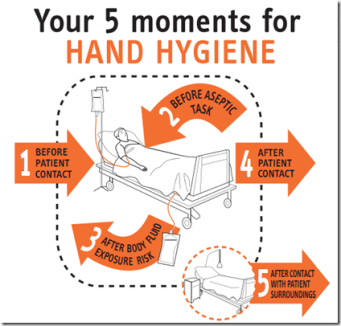
There is a large literature on the importance of frequent hand washing in hospitals, to prevent spreading infectious diseases among patients. It’s a major problem, since hospital-caused infections are growing, and have nasty effects.image5b135d

Brad Stats recently sent me two papers he co-authored on the topic. Both are based on an analysis of  behavior by 4100 caregivers. They led me to ask two sets of questions. First, if everyone did comply with the recommendations on hand-washing frequency and duration, how much time would it take out of their work day? Second, while there have been lots of projects using  electronics for monitoring compliance, has there been any work on straightforward manufacturing-style interventions to make compliance easier?

Here are my questions in more detail, taken from an email to Brad.

Continue reading

Drones Hunt Down Poachers in South Africa | Flying Magazine

The Lindbergh Foundation’s Air Shepherd initiative uses drones to catch poachers in South Africa.

My comment: Flying at night, up to 40km away, is technically difficult. But smart autopilots, using GPS and accelerometers, mean that the operators (pilots) don’t have to do hands-on flying except landing and takeoff.  Probably every component in the system except the ground vehicles is hobbyist level, although some of the specialized long-range radio gear might need to be hand built.  Nothing from aerospace companies.  Battery powered, so essentially noiseless. Also, the aircraft itself is the cheapest part of the system.

The article mentions flights of “up to 4 hours.” That is a very long duration, and would require lots of batteries. 2 hours or even less sounds more realistic. Efficient cruising speed is probably is probably around 40 kph (25 mph). If anyone finds other discussions of this project, please let me know.

Source: Drones Hunt Down Poachers in South Africa | Flying Magazine

Who Will Debunk The Debunkers? Reality and Myth in history of science

Separating historical truth from myth is as hard in science as anywhere else. This article has several examples, including whether Darwin got his ideas from someone else, and a dispute about whether Semmelweis was really ignored after his discovery of the link  between hand-washing and disease.

Semmelweiss teaches doctors to wash their hands c 1850 – it is still an issue today

The Hamblin article [about a supposed misplaced decimal point], unscholarly and unsourced, would become the ultimate authority for all the citations that followed. (Hamblin graciously acknowledged his mistake after Sutton published his research, as did Arbesman.)

In 2014, a Norwegian anthropologist named Ole Bjorn Rekdal published an examination of how the decimal-point myth had propagated through the academic literature. He found that bad citations were the vector. Instead of looking for its source, those who told the story merely plagiarized a solid-sounding reference: “(Hamblin, BMJ, 1981).” Or they cited someone in between — someone who, in turn, had cited Hamblin. This loose behavior, Rekdal wrote, made the transposed decimal point into something like an “academic urban legend,” its nested sourcing more or less equivalent to the familiar “friend of a friend” of schoolyard mythology. Source: Who Will Debunk The Debunkers? | FiveThirtyEight

I found a similar myth about aviation checklists. It’s a myth that they were invented because of the crash of a B-17 bomber prototype in 1935. The first B-17 checklist was in 1937, and by then many Navy aircraft had more complete checklists. Including one published before the 1935 crash.

As far as I could tell when I researched this, the B-17 checklist story was first told in a 1965 book by Edward Jablonski. Since then the myth has been passed from article to article to book, such as Atul Gawande’s generally excellent book, Checklist. The crash did happen, but checklists were invented independently of it.

Self-driving cars may take decades to prove safety: Not so.

Proving self-driving cars are safe could take up to hundreds of years under the current testing regime, a new Rand Corporation study claims. Source: Self-driving cars may not be proven safe for decades: report  The statistical analysis in this paper looks fine, but the problem is even worse for aircraft (since they are far safer per mile than autos.) Yet new aircraft are sold after approx 3 years of testing, and less than 1 million miles flown. How?

From the report:

we will show that fully autonomous vehicles would have to be driven hundreds of millions of miles and sometimes hundreds of billions of miles to demonstrate their reliability in terms of fatalities and injuries. Under even aggressive testing assumptions, existing  fleets would take tens and sometimes hundreds of years to drive these miles.

How does the airline industry get around the analogous statistics? By understanding how aircraft fail, and designing/testing for those specific issues, with carefully calculated specification limits. They don’t just fly around, waiting for the autopilot to fail!

Continue reading