Zika virus: Forbes columnist can’t bear to say “market failure”

Here’s a column by a Forbes blogger about Zika saying that “we should not wait so long to develop vaccines against tropical diseases.” He concludes:

 Many pharmaceutical companies don’t focus on a disease until it becomes common enough to be highly profitable. The trouble is the vaccine world has become a bit like the plot line for “She’s All That” or “Cinderella.” Attention towards a person or thing does not occur until a cool person notices he or she or it. But when it comes to disease and stock market opportunities, as the saying goes, once your grandmother knows about it, it is usually too late.

Source: Zika Vaccine: Another Example Of Waiting Until It’s Too Late? – Forbes

This is not news. And it’s a classic situation where market forces are not enough to give socially desirable behavior. Developing a vaccine for a disease that is not in rich countries has low expected profitability. Even if the disease goes epidemic, pharma company will have to sell at a price near marginal cost.

The only solution is to use a different way to fund development. Contests, grants (Gates foundation), purchase guarantees (used by US DoD) all work. But waiting for the traditional patent system + pharma profit motive won’t lead to timely development of medication for poor-country diseases.

I guess a Forbes columnist is not allowed to point this out.
Is the FDA Too Conservative or Too Aggressive?

I have long argued that the FDA has an incentive to delay the introduction of new drugs because approving a bad drug (Type I error) has more severe consequences for the FDA than does failing to approve a good drug (Type II […]

Source: Is the FDA Too Conservative or Too Aggressive?

My take: this paper by  Vahid Montazerhodjat and Andrew Lo is interesting, but it only looks at one issue, and there are many other problems that make overapproval more likely. There are many  biases in the drug pipeline and FDA approval process, most of which are heavily in favor of approving drugs that do nothing (and yet, still have side effects). To mention one of many, the population used to test drugs is younger, healthier, more homogeneous, and more compliant than the population that ends up actually taking the drug. A second bias is that the testing process screens out people who have major side effects – they stop taking the drug, and are dropped from the sample (and from the statistical analysis at the end). So we only see the people with moderate or no side effects. Both of these problems lead to biases, which better statistical methods cannot remove.

The paper is interesting, but it is working from an idealized model of the drug research process, and I would not take its quantitative results seriously. The basic logic seems sound, though: there should be different approval standards for different diseases.

First FAA-Approved Drone Delivery Is a Success, but Does It Matter? – IEEE Spectrum

First FAA-Approved Drone Delivery Is a Success, but Does It Matter? 

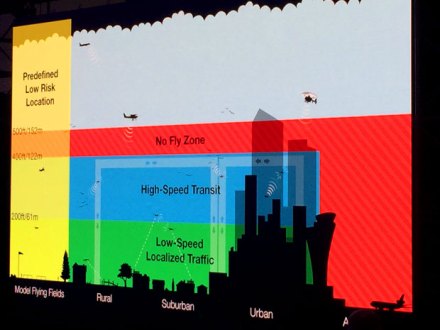
I’ve been tracking the potential for drone (Autonomous vehicle) delivery of packages since before Amazon proposed it. I’m generally very skeptical that it can play a major role in delivering routine packages. And I certainly thought Amazon’s claimed timetable was blowing smoke. (As it turned out to be.)

Basic issues include safety, landing somewhere in urban areas, weather (except where I live) and payload/range/weight. Longer range or bigger payload require a larger vehicle, which is more of a  potential safety hazard. Micro navigation (phone poles) might also be a problem, as stated in this IEEE article, but I can envision technical solutions to that issue.

Here is a 2013 IEEE article that makes the basic anti-Amazon case.  Amazon was talking about being ready in 2015!

Yet over a longer period, say before 2020, there are niche applications that will be feasible. Whether they will be economically sensible remains to be seen. Rather clearly, deliveries will start with small, high-value, urgent packages.  Here’s a  video about a rural demonstration of delivering meds.

Here is my comment to someone who said drone delivery was impossible because of theft and safety.

Theft is an issue, but there are many potential partial solutions. For example, once stolen the drone would not function. (It could still be stripped for parts, but that has possible solutions as well.) So it becomes an arms race/incentive system, just like stealing packages from your front door.

   Safety is an issue in cities, but suppose the drones become as safe as a delivery truck driving through your neighborhood. A six rotor drone is pretty robust. Safety is less of an issue in some regions. And there may even be ways to “crash safe,” including airbags, parachutes, etc.

Regulatory fear is likely to continue to be a big issue in the USA. In my opinion, that is a shame, and will destroy the US lead in the technology (for which there are many good applications – just probably not package delivery). So I’m glad to see Amazon is taking a role in proposing sensible regulation. 

First FAA-Approved Drone Delivery Is a Success, but Does It Matter? - IEEE Spectrum

General drone technology clearly has a productive future. But my guess is that the US will be pushed aside by other countries that are less hung up about regulating every possible problem. (E.g. Australia?)

Worst graphic of the month?

Distorted pictures. The water droplets are drawn with linear scaling, when they should use area scaling. 672 gallons is about 3X 198 gallons, but the picture looks 11X larger!

Selective facts. Once-through nuclear cooling is about 400 gallons/MWh. Solar thermal normally uses wet cooling, with up to 900 gallons/MWh, or “500 to 800 gal/MWh.” (US DOE) New solar thermal dry cooling tech can reduce this “90%”, but does not work well on hot days. And dry cooling is also possible for nuclear plants.


SO distorted. Both visually and in substance.

There are plenty of arguments pro and con various energy technologies, but blatant distortion does not help make good decisions!

No, a study did not link GM crops to 22 diseases

No, a study did not link GM crops to 22 diseases.

And a  candidate for worst graph of the year, appearing to show that deaths from a certain class of diseases grew in parallel with some farming trends. ! (Figure 16 in the article, which is at http://www.organic-systems.org/journal/92/JOS_Volume-9_Number-2_Nov_2014-Swanson-et-al.pdf ). Any steadily increasing time series can be plotted so that they lie approximately on top of each other, if you distort the scales enough. Other “causes” they could have plotted, with approximately the same results: cell-phone per capita, percentage of cars on the road with ABS brakes, and (for all I know) average campaign spending per Congressional race.

Kindle books and academic research = needless pain

I’ve probably purchased 300 books in the last year for research purposes, not to mention all the fiction my wife gets (and so do I, if it costs $3 or less).  For the newer ones , buying them as eBooks is generally an option. But the state of software, DRM, and copy protection for Kindle books is a mess. Kindle’s software (like iBooks) is deliberately crippled – no copying into another document, no printing, and especially no way to copy diagrams. I’m running Kindle’s software on my Mac and on an iPad, rather than using a Kindle tablet, but that barely helps.

Librarians against DRM

Continue reading

Joe Stiglitz disses TPP treaty: it’s for corporations, not people

Joe Stiglitz critique of TPP Trans-Pacific Partnership treaty:

 Corporations on both sides of the Pacific have an interest at lowering regulatory standards—to protect the environment, to protect consumers, to protect workers, to protect health. But ordinary citizens, our society, will suffer. So you can get corporations on both sides pushing an agenda that will be increasing corporate profits at the cost of the well-being of people on both sides of the Pacific.

…Philip Morris is suing Uruguay under an investment agreement. It says, “This interferes with our basic right to sell products to kill people.” It’s like the Opium War 150 years ago, where the West went to war because China said, “We don’t want opium,” and we said, “That interferes with the basic right to trade.”

Web Special: Joseph Stiglitz on TPP, Cracking Down on Corporate Tax Dodgers & New BRICS Bank

More analysis of corporate capture of the TPP treaty,