See Roger Bohn speak on HMI

Roger will be appearing at a UCSD colloquium on Wednesday, February 3, to discuss the results of the HMI project.

The event will be held in the Media Center / Communications building on campus (map here), and the nearest parking is just across the way on Muir College Drive. He’s scheduled to speak at 12:40PM in room MCC 201.

Here’s the official blurb:

How much information do Americans consume? At the start we have to define information, consume, and much.  All three definitions are unavoidably controversial. …

I will present and discuss our results, most of which are available in our report at hmi.ucsd.edu. We didn’t have strong expectations of what we would find, but we were surprised anyway. Continue reading
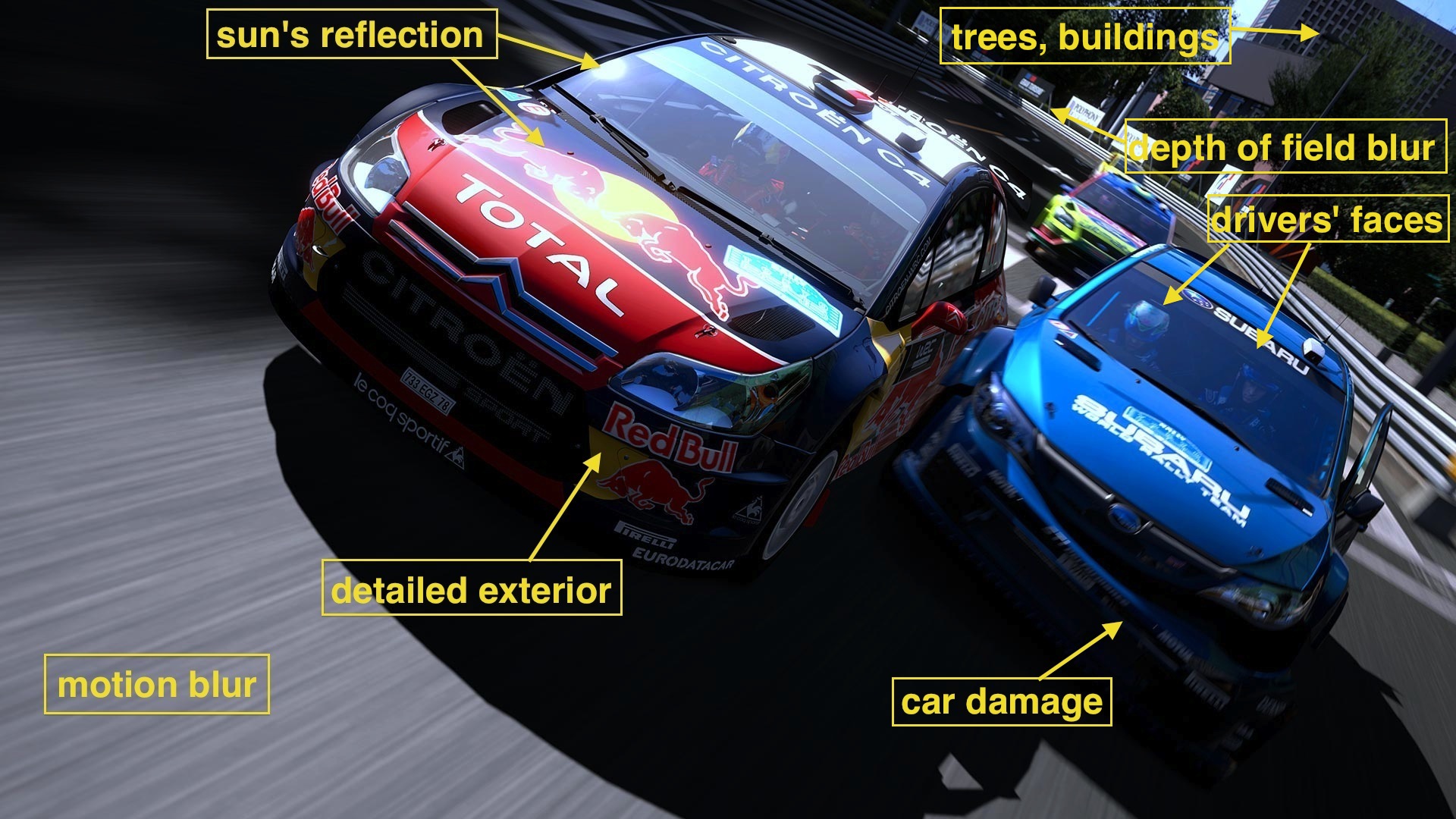
HMI Bonus Material: Video Game Screenshots

Hello! Blake Ellison here, and I’m Roger’s newest grad student assistant. I’m interested in video games (both academically and personally), so I’m helping the team try to make sense of our findings that video games make up a huge proportion of our data consumption (when bytes are used as the measure).

A simple reason why video games comprise so much of our information  is the sheer volume of pixels that get transmitted to your eyeballs. A game running at 60 frames per second at 1080i on a current-generation console like the Xbox 360 is pumping out a huge amount of data. That’s to say nothing of hardcore PC gamers, who have what amount to miniature supercomputers sitting on their desktops.

Polyphony Digital's Gran Turismo 5

These ‘supercomputers’ don’t have all that power simply to push out 1920 x 1080 pixels 60 times per second. They have the power to do all that and make it look good. Continue reading

Small is Beautiful for global health tech? A good theme for project proposals

(This presentation discusses the “car-parts neonatal incubator” in more detail, which  the NY Times profiled recently.  This is an example of appropriate technology. It would make a good takeoff point for projects in several of my courses.)

Many multinational companies manufacturing medical devices for developing countries focus their efforts on high-end products too expensive to be used in most healthcare settings. Unable to afford their own equipment, healthcare providers in areas with few resources often receive donated equipment from international organizations. Unfortunately, while this donated equipment is usually state-of-the-art, it often ends up falling into disrepair and eventually disuse. Donors with the best of intentions fall into the trap of donating equipment that the recipient cannot afford to maintain. Just as most of us would like to own a Ferrari but would be unable to pay for its upkeep, most clinics in resource-poor areas cannot afford to maintain expensive devices, such as incubators, designed for use in developed countries.

via CIMIT Forum: Medical Devices in Global Health: Idea to Implementation, Successes and Challenges.

Military Deluged in Drone Intelligence – NYTimes.com

By CHRISTOPHER DREW  Published: January 10, 2010

HAMPTON, Va. — As the military rushes to place more spy drones over Afghanistan, the remote-controlled planes are producing so much video intelligence that analysts are finding it more and more difficult to keep up.

Air Force drones collected nearly three times as much video over Afghanistan and Iraq last year as in 2007 — about 24 years’ worth if watched continuously. That volume is expected to multiply in the coming years as drones are added to the fleet and as some start using multiple cameras to shoot in many directions.

via Military Deluged in Drone Intelligence – NYTimes.com.

[Actually I’m surprised that the 24 multiplier is not higher, especially since some drones operate at night. On average, only 24 cameras are running.]

Airmen in air-conditioned rooms

HMI: Multitasking

We document a huge amount of information in our report How Much Information 2009 . Personally I find the 100,000 words per day as startling as the 34 gigabytes. Our report does not go into it, but there is some literature on how constant streams of information affect people. I’ve asked Lin Ong (RA) to pull together some articles, but here is a recent publication about the myth of multitasking, i.e. the claim that people can do several things at once and do them all well.  The underlying research the BBC discusses is published here. (fee or license required)

The people who engage in media “multitasking” are those least able to do so well, according to researchers. A survey defined two groups: those who routinely consumed multiple media such as internet, television and mobile phones, and those who did not. In a series of three classic psychology tests for attention and memory, the “low multitaskers” consistently outdid their highly multitasking counterparts. The results are reported in Proceedings of the National Academy of Sciences.

via BBC NEWS | Technology | Multitaskers bad at multitasking.

A Lifehacker column interviews another author on the subject. A psychiatrist with a book  on the human effects of overstimulation is discussed in a Business Week column for the frazzled.

Re-using CIA photos for research

The world is awash in data…. a lot of it can be re-used for other purposes. (Anecdote: Much of the early data on sea temperatures comes from the British Navy, whose ships routinely measured  a bucket of seawater every morning. Not exactly precise data, and using it requires estimates of things like how long the bucket sat on deck before being measured, and the accuracy of thermometers in the British Navy in 1800.)

The nation’s top scientists and spies are collaborating on an effort to use the federal government’s intelligence assets — including spy satellites and other classified sensors — to assess the hidden complexities of environmental change. They seek insights from natural phenomena like clouds and glaciers, deserts and tropical forests.

….

The trove of images is “really useful,” said Norbert Untersteiner, a professor at the University of Washington who specializes in polar ice and is a member of the team of spies and scientists behind the effort.

via C.I.A. Revives Data-Sharing Program With Environmental Scientists – NYTimes.com.

Query: What is Google doing to archive its maps and satellite imagery? I can’t imagine they get thrown away, but keeping full resolution versions of everything would be expensive.

American history repeats…

We had to struggle with the old enemies of peace–business and financial monopoly, speculation, reckless banking, class antagonism, sectionalism, war profiteering.

They had begun to consider the Government of the United States as a mere appendage to their own affairs. We know now that Government by organized money is just as dangerous as Government by organized mob.

Never before in all our history have these forces been so united against one candidate as they stand today. They are unanimous in their hate for me–and I welcome their hatred.

Franklin Roosevelt re-election speech.  Speech at Madison Square Garden (October 31, 1936) – Miller Center of Public Affairs.

Was the vitriol against FDR (who started Social Security, threatened to pack the Supreme Court, and was “radical” by most definitions) greater than the vitriol against Obama? Probably, but with modern communications media it’s easier to see it today. And I can’t imagine Obama saying “and I welcome their hatred!” It’s too much like “Bring it on!”